Plan before committing.
Define the problem, constraints, assumptions, and verification path before treating a concept as a solution.
The concise principles come first. The original ESC102 position statement, flowchart, reflections, and references remain below as an explicitly archived academic artifact.
Define the problem, constraints, assumptions, and verification path before treating a concept as a solution.
When a method appears unsafe, weak, or unsupported, surface the concern and connect it to evidence.
Collaborate and compromise without hiding uncertainty, sacrificed criteria, or the limits of the result.
The wording below is preserved from the original ESC102 assignment for academic context. Its “first-year” reference describes the time of that submission, not a claim about Jan’s current academic year.
My name is Jan Kazimierczak and I’m a first-year student in the University of Toronto Engineering Science program. My interest in engineering started when I was around 13 years old with the first Falcon Heavy launch. Seeing both boosters land with such precision was one of the most beautiful things I had seen, and it changed my life. Since then, I have seen engineering as a means of changing our world for the better. I understand engineering design to be a structured and efficient approach to addressing an opportunity by modifying the world around us.
My ethical stance on engineering design is influenced by my background. I am Polish and thus have been influenced by Catholic thought. This affects me in multiple ways. Firstly, I believe my work is a duty which requires commitment and is thus important for me to be intentional and hard working. Also, I want the wellbeing of every human being, but I understand that this is not necessarily advanced in every engineering project. The human situation is complex and a factor that cannot be ignored. The best way I have found to manage this fact is an ethical line which cannot be crossed. I believe that designs cannot interfere with the freedom of, nor the life of innocent human beings. I understand that this red line is not directly relevant to the Praxis II project. However, I also understand that ethical boundaries are important to define early in one’s career.
Regarding my practices in engineering design, I can pinpoint three distinct events or projects that have shaped my approach: a high-school science symposium project, high-school musical stage construction, and the Praxis I project.
Having covered all these points, I can express my approach to engineering design in the following way [Figure 1]: Coming from a Catholic background I want the product of engineering design to benefit the most people possible. While working on a project I take the planning and designing stage very seriously to ensure the projects are completed with due diligence and efficiency. When encountering a problem or potential risk I raise my concern so we can work together to find a solution. And finally, when working in a group I find compromises on ideas so we can develop a good working environment to explore all ideas and solution proposals.
The flowchart below summarizes the process described in the position statement. It links ethical checks, careful planning, raising concerns, compromise, iteration, and delivery into one design approach.
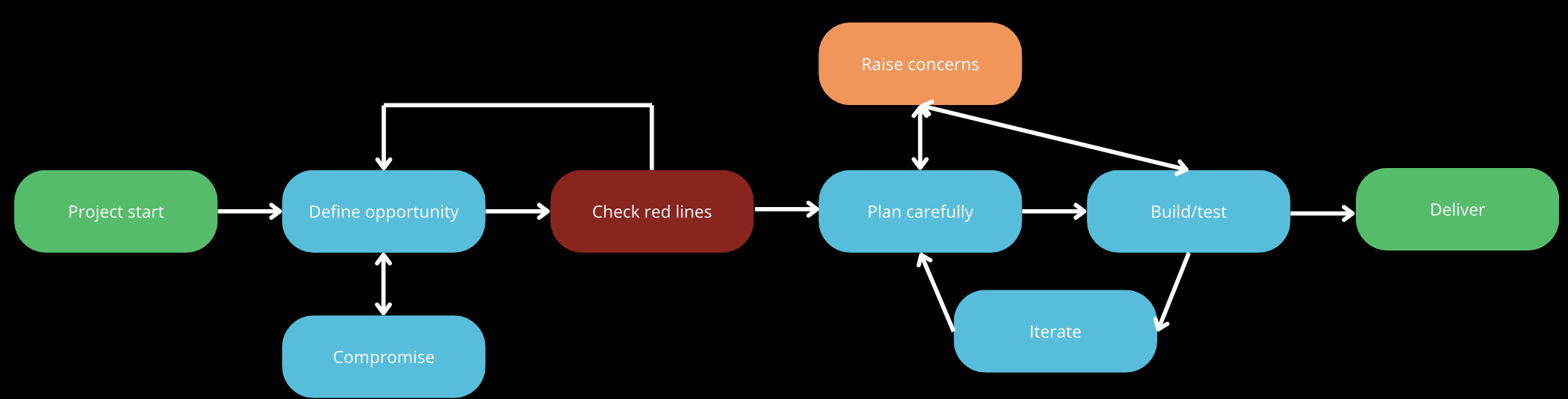
Simplified flowchart of my approach to engineering design as described in the document. The “Red lines check” loop links back to my background and ideals. The “compromise” loop links to the Praxis I experience. The “Plan carefully” stage links to the science symposium project, and the “Raise concerns” stage links to the stage-design experience.
Each project reflects a different part of the position statement: compromise in teamwork, careful planning and performance evaluation, and systematic design through iteration.
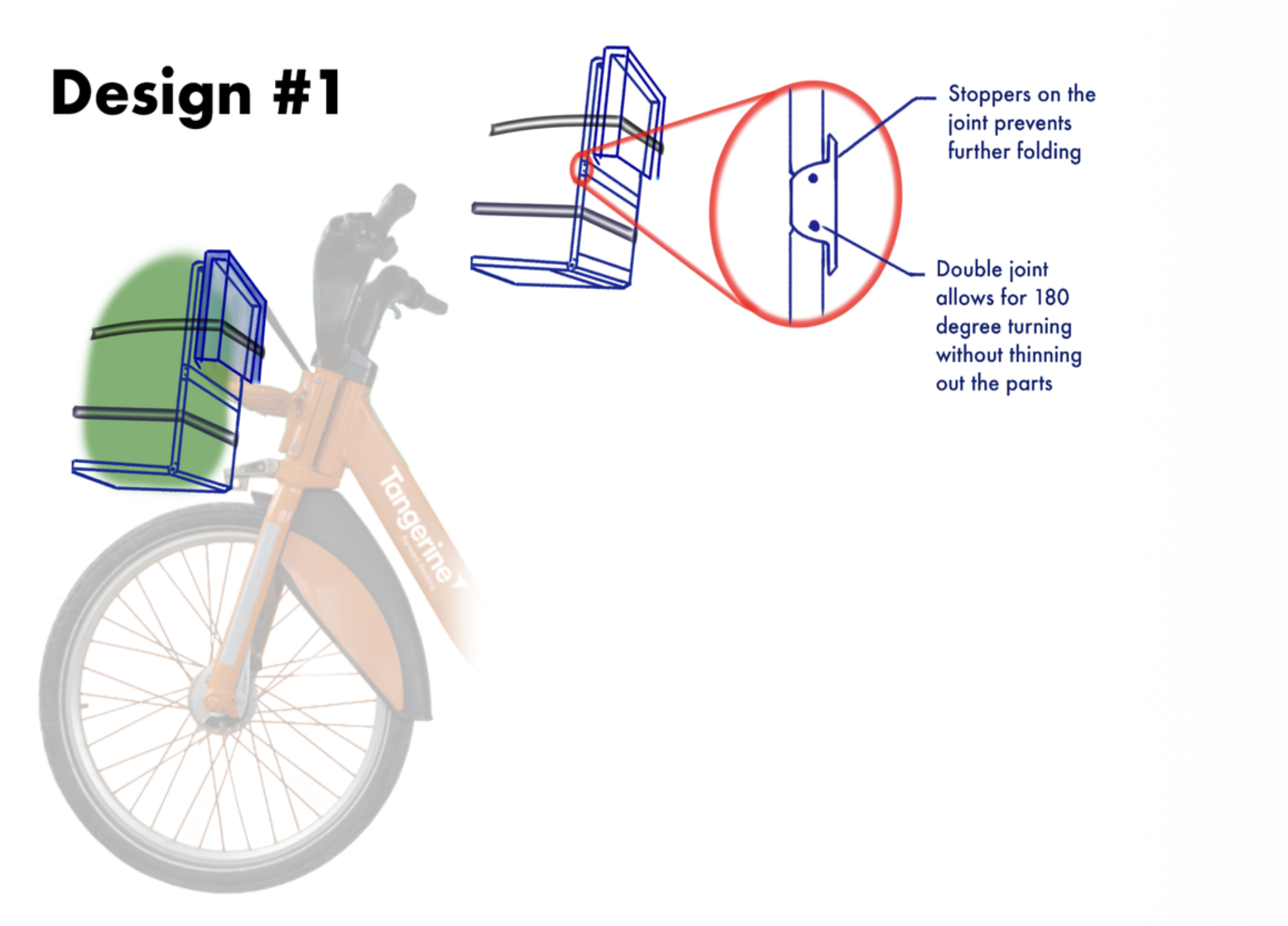
A front-basket extension concept intended to move a backpack load from the rider’s body to the bicycle. This project connects especially well to compromise, shared decision-making, and iterative design work.
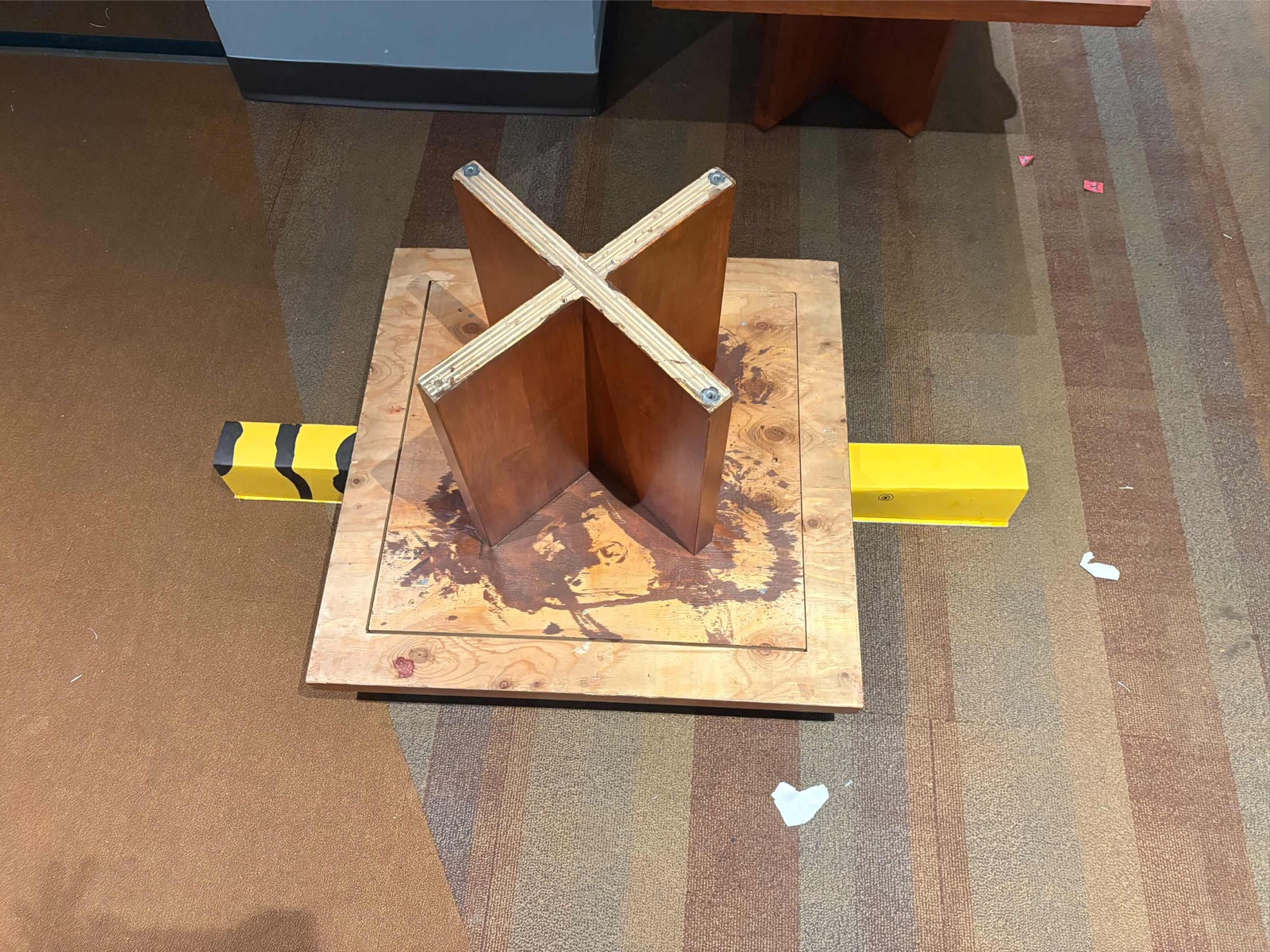
A bridge project centered on material constraints, structural behavior, and performance under load. It reflects careful planning, due diligence, and the responsibility to understand whether a design is actually safe and effective.
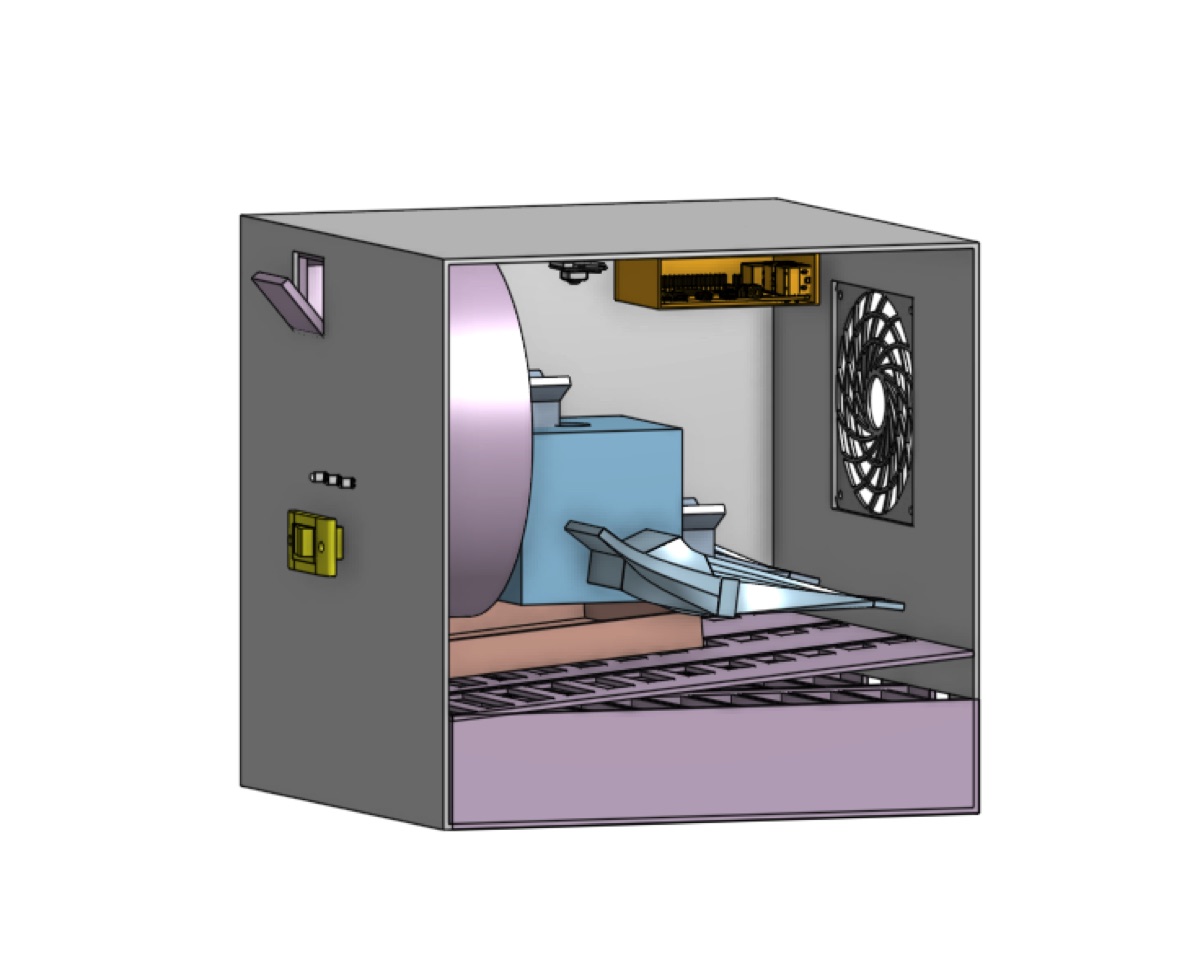
A compact device concept built around a specific physical task and the logic intended to carry it out. It represents a systematic design problem where planning, mechanism choices, testing, and iteration all matter.
The praxis I project was my first experience working in a team where we all had authority and responsibility for the design. This made it clear to me that compromise and shared decision making are important when being in a team.
The Praxis II project introduced me to a more advanced engineering design process. As a three-person team managing a larger project than those in CIV102 and Praxis I, we had to communicate clearly and share responsibility. This reinforced the distinction between formal “Authority” and the authority each team member carries. The project also helped me strengthen my planning and communication skills and become more intentional and systematic in my design approach.
The CIV102 bridge project was my first experience with a more rigorous engineering design project, where the need for careful planning and due diligence became clearer. Earlier projects focused mainly on process, research, and prototyping; this project placed greater emphasis on implementation, analysis, and testing. We examined the bridge’s potential failure modes and iterated on the design using those calculations. I learned the importance of validating design choices through analysis and physical evidence, and of communicating those findings effectively within a team. Seeing the constructed bridge fail at a splice also showed me that a model can guide a design without predicting every real-world failure mode.
References grouped by project for the design portfolio page. Extracted from the reports.